
Clear, consistent and regulatorily-compliant product information – kothes and eDok combine medical technology expertise with information expertise.
Technical documentation for medical devices is an important part of product safety. Information accompanying products must be clear, complete and consistent, especially in the field of medical technology. The intended purpose, risk management, usability, labelling and instructions for use must all be consistent with one another. Changes to the product or to the software can therefore affect several documents, language versions and approvals.
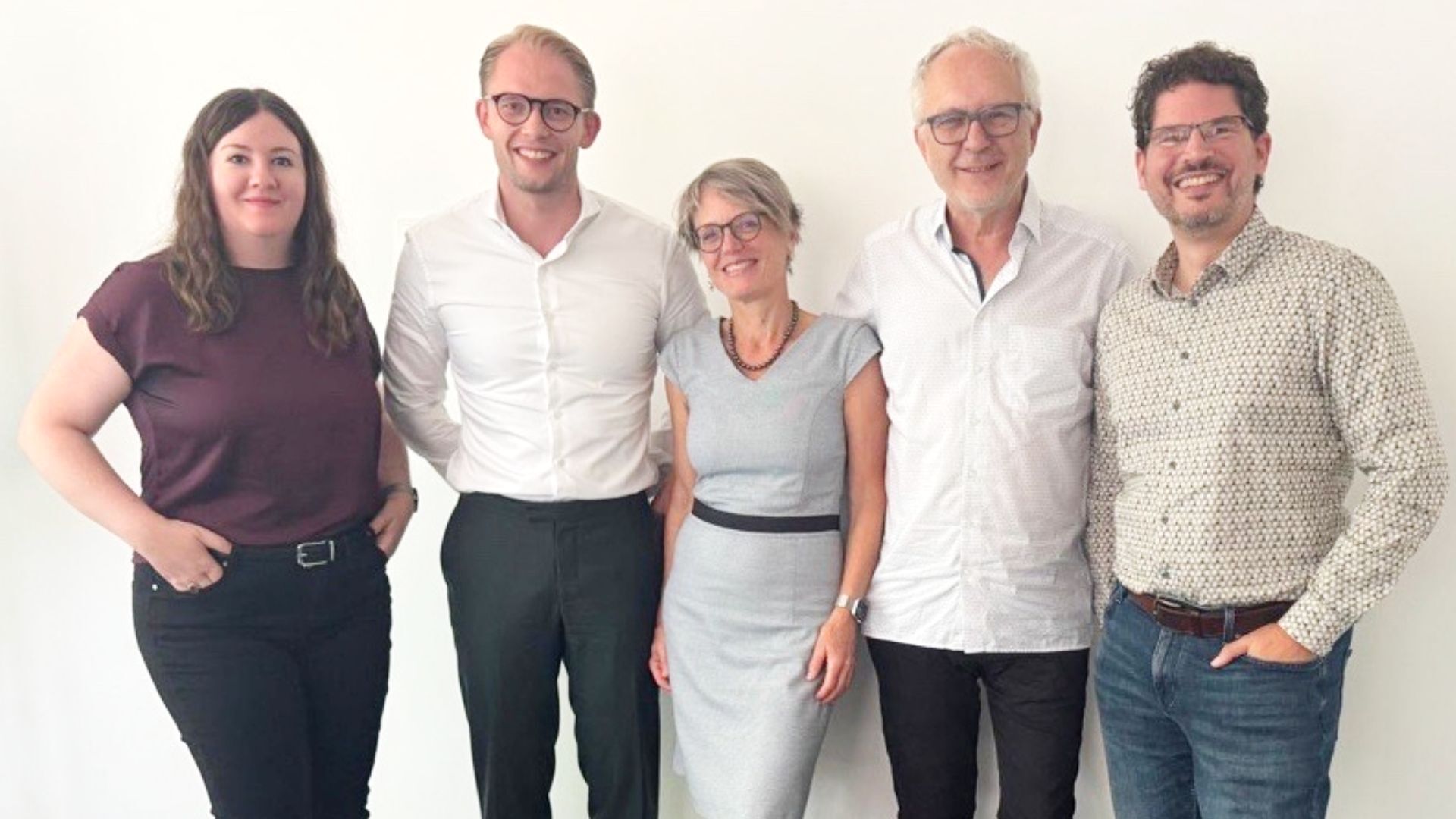
The kothes Group includes eDok, a specialised service provider for the medical technology sector. Together, we support you in creating and maintaining your information. To this end, we combine regulatory expertise with editorial implementation, translation and tailored solutions for structured content and digital delivery.
The technical documentation for a medical device comprises various types of content, evidence and approval statuses. It is essential that all information is clearly assigned, up-to-date and traceable throughout the entire product life cycle. Information from development, risk management, regulatory affairs and product management must be correctly integrated into the labelling and instructions for use. kothes and eDok combine specialised experience in medical technology with scalable services for technical documentation, translation and information management.

We align the content and structure with your product, its intended purpose and the specified regulatory requirements. Relevant sources and supporting documents are incorporated into the technical writing in a transparent manner.

We prepare complex product information for the intended users and situations of use. Safety information, operating instructions and product functions are presented within a coherent overall context.

Product variants, new software versions and updated risk information can affect multiple pieces of content and languages. Clear validity periods and approvals help to keep all affected information up to date.

We adapt language, terminology, symbols and other market-related content to the requirements of the target country in question. Regulated translation and approval processes ensure that instructions for use, software texts and labelling remain consistent.

"We're an internationally active Medical Technology company. Security, and therefore also language, plays an important role for us. Our products are used by many people around the world. Every good product comes with high-quality instructions for use. As a long-standing partner, kothes supports us with the translation of our technical documentation, helping to ensure that the information required for safe use is conveyed accurately in the relevant national or local languages."
Wolfgang Schümann
Head of Development & technical documentation
AKS
"Even after a short time, kothes has proved to be a reliable partner – not only in consulting, but also in taking on project-related work at short notice."
Berit Clausen
Head of Technical Documentation EMEA
Invacare International GmbH
"It is very helpful to have a dedicated point of contact at kothes who manages even complex projects – involving participants from several companies – reliably and transparently."
Dr. Stephanie Thoennissen
Head of Business Development & Regulatory Affairs
PLASMACONCEPT AG

“We have been working with kothes GmbH as our preferred language service provider since 2018 and are very satisfied with its work. We highly recommend kothes for their expertise in translation and localisation, as well as their professionalism. Our sophisticated and demanding target audience relies on accurate, up-to-date information in their own language, and kothes consistently delivers."
John Bayley
Technical Content Manager
Hamilton Company

"We're an internationally active Medical Technology company. Security, and therefore also language, plays an important role for us. Our products are used by many people around the world. Every good product comes with high-quality instructions for use. As a long-standing partner, kothes supports us with the translation of our technical documentation, helping to ensure that the information required for safe use is conveyed accurately in the relevant national or local languages."
Wolfgang Schümann
Head of Development & technical documentation
AKS
"Even after a short time, kothes has proved to be a reliable partner – not only in consulting, but also in taking on project-related work at short notice."
Berit Clausen
Head of Technical Documentation EMEA
Invacare International GmbH
eDok is the specialist medical technology service provider within the kothes Group. The team contributes regulatory and authoring experience in the field of medical devices. Customers can combine this specialisation with kothes' broad range of services, such as technical writing, translation, systems consulting and digital information delivery. Medical technology enquiries are jointly assessed and handed over to the appropriate specialists within the group.
The technical documentation for a medical device is the manufacturer's comprehensive set of evidence. It describes the product and its intended purpose and includes, among other things, documents on development, risk management, verification, validation and post-market surveillance. By contrast, the instructions for use provide users with information supplied with the product. They explain its intended use and provide the necessary safety and handling information. The instructions for use form part of a medical device’s technical documentation.
The specific requirements depend on the product, its intended purpose, risk class, target group and the intended markets. The MDR contains basic requirements for the information supplied with the product, in particular in Annex I, Chapter III. Depending on the product, these include, for example, information on identification, intended purpose, safe use, installation, maintenance, preparation, contraindications and residual risks. In addition, product-specific standards and national language requirements may be relevant.
The instructions for use are part of risk control. Risks that cannot be adequately controlled by design or technical measures must be addressed in an appropriate form in the instructions for use. Warnings and safety instructions should therefore be derived from the risk management process. Conversely, new findings from development, usability, complaints or market observation must be assessed to see whether the instructions for use need to be adapted. General warnings without a specific reference are not a substitute for a coordinated risk assessment.
The risk class influences the conformity assessment procedure and the extent to which a notified body is involved. However, the basic obligation to have comprehensible technical documentation applies to all medical devices. The specific evidence, assessments and information accompanying the product that are required do not depend solely on the class. The intended purpose, product characteristics, duration of use, invasiveness and other classification characteristics also play a role.
In the case of software as a medical device, in addition to the intended purpose and risk classification, the software architecture, development life cycle, verification, validation and relevant risks must also be documented in a traceable manner. Changes to functions, the user interface or algorithms can have an impact on risk management, usability and instructions for use. It is also crucial that the valid documentation can be clearly assigned to the respective software version. Which standards and evidence are to be applied depends on the specific software and its medical function.
An update may be necessary if the intended purpose, functions, operating procedures, safety information, software versions or regulatory requirements change. Insights from complaints, vigilance, market observation and post-market surveillance can also trigger adjustments. Before making a change, it should be checked which documents, labels, language versions and products already delivered are affected. The approval and validity of the new version must be regulated in a transparent manner.
The languages required depend on the markets in which the product is made available and on the respective national requirements. Technical terms, warnings, symbols and the intended purpose must remain consistent across all language versions. Approved terminology, qualified translation processes and documented checks are important for this purpose. If content is changed, it must also be clear which language versions are affected and need to be approved again.
Electronic instructions for use are possible for certain medical devices and under specified conditions. In addition to the MDR or IVDR, the applicable specifications for electronic directions for use are particularly relevant. Manufacturers must first check whether electronic provision is even permissible for the product and its intended users. Access, availability, version status, data protection and the possibility of a printed version must also be taken into account.
We will get back to you as soon as possible.