

Process optimisation in technical writing: digitalise product information end-to-end
if you want to reduce or completely eliminate the costs for paper, storage and shipping

if you want to provide your users with more targeted access to always up-to-date technical documentation

if you want to store technical knowledge centrally and make it available for development, service and the technical writing team

if you want to develop digital services, customer portals or new business models from your technical documentation

The digitalisation of technical documentation sounds simple – in everyday content management it quickly becomes clear how complex the topic is. Many companies already provide their documentation as PDFs, but that does not solve the real questions: Which system fits your processes and products? Where do you stand today and what is the logical next step?
Existing tools reach their limits, process optimisation in technical writing falls by the wayside and modular content remains wishful thinking.
At the same time, expectations are rising: Customers and service teams need targeted access to the information that fits their specific requirements.
Meaningful digitalisation therefore does not just replace paper. It structures information in such a way that it can be found and combined in a targeted manner and provided via suitable digital channels. This may even result in customer portals, service offerings and new business models.
We develop the right digital information solution, prepare your content for it and implement the required systems and functions.
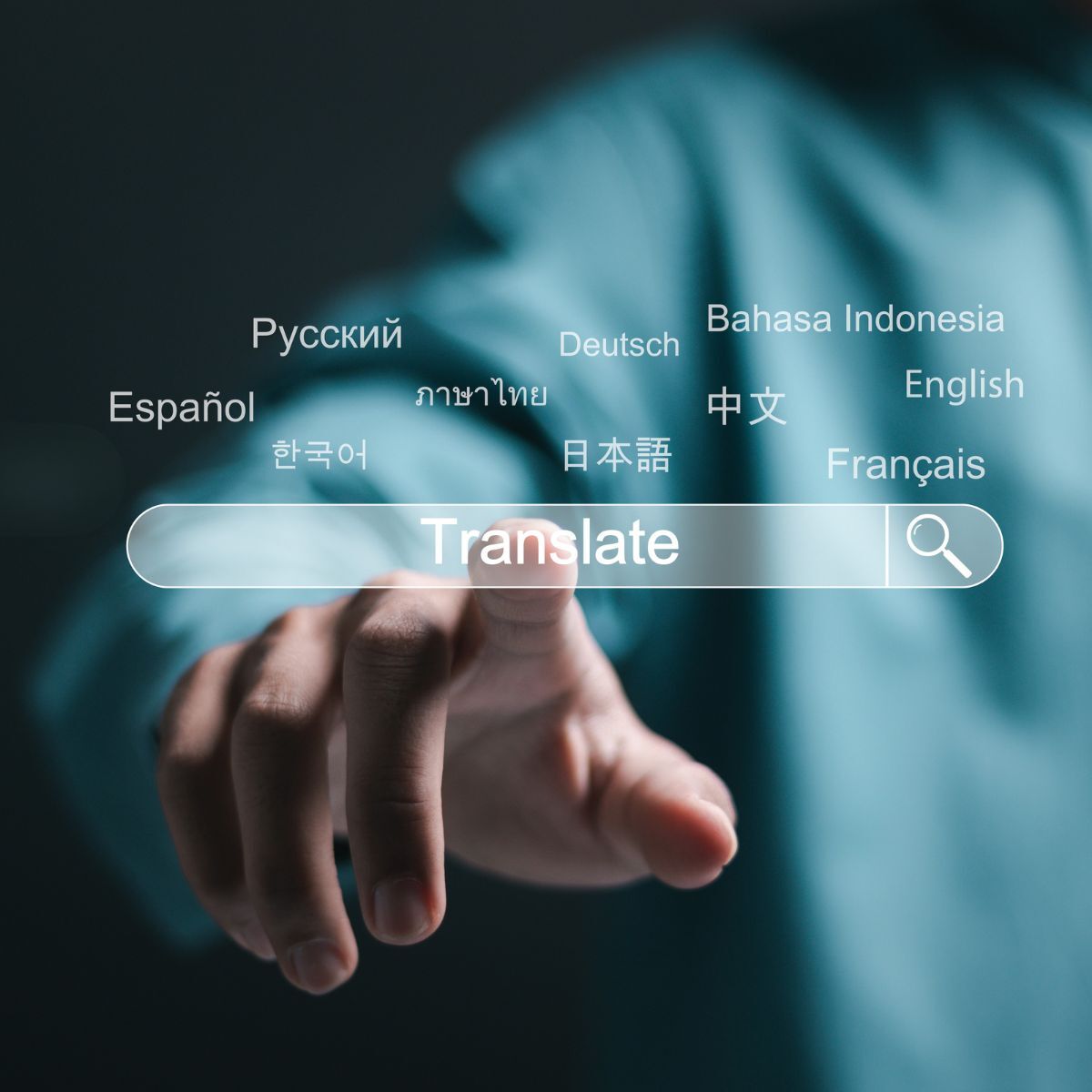
We translate your digital information for all relevant target markets. Customers and service teams receive the content they need in their respective local language, regardless of whether they access it via a portal, an app or another digital channel. A harmonised terminology ensures that technical terms are used consistently across languages and markets.

You receive a concept that fits your goals exactly: your customers and service teams quickly find the information they need. Your editorial processes run more efficiently. Your systems work together seamlessly. We work with you to develop information models and system landscapes that match your products and requirements, select the right tools and integrate them into your existing IT.

Your existing content becomes usable: we structure it into reusable units and enrich it with the necessary metadata. This allows information to be assembled in a targeted way – tailored to product, task and usage situation.The result: your customers find the right answer more quickly, your service teams work more efficiently, and you can provide content flexibly via portals or other digital channels.

You noticeably relieve pressure on your service teams and reduce support requests: AI-supported search functions enable users to ask questions in natural language and immediately receive the appropriate answer from your technical documentation – automated and without manual reworking. Instead of searching through extensive documents, the AI delivers precisely the information that fits the specific task. We develop AI applications that access your approved content, intelligently link it and make it available around the clock.

We translate your digital information for all relevant target markets. Customers and service teams receive the content they need in their respective local language, regardless of whether they access it via a portal, an app or another digital channel. A harmonised terminology ensures that technical terms are used consistently across languages and markets.

You receive a concept that fits your goals exactly: your customers and service teams quickly find the information they need. Your editorial processes run more efficiently. Your systems work together seamlessly. We work with you to develop information models and system landscapes that match your products and requirements, select the right tools and integrate them into your existing IT.

Reduce printing, storage and shipping costs without completely rebuilding your documentation.
Suitable for:
quick start
existing PDF documentation
low system complexity
Typical scope:
central document access
QR code linking
up-to-date PDF version
secure delivery
A standard portal provides information tailored to the product, role or usage situation. Filters, search and metadata guide users more quickly to the content they need.
Suitable for:
many products and variants
structured information
multiple target groups and markets
Typical scope:
system selection
information model
interfaces
implementation and operation
We develop an individual solution that allows users to ask questions in natural language and receive targeted answers from your approved technical documents.
Suitable for:
individual requirements
existing document collections
dialogue-oriented access to information
Typical scope:
use case and data basis
AI-supported search
individual user interface
We are certified to ISO 9001, ISO 17100 and ISO 18587, meeting internationally recognised standards for quality management, translation services and post-editing of machine translation.
Our customers rate us 9.2 out of 10. This score reflects our commitment to building strong partnerships and delivering reliable service.
We follow automotive industry standards and actively invest in data protection, information security and availability.

Our employees rate kothes highly, well above the average. This reflects our positive company culture and the quality of our working relationships.
tekom Germany has honoured us with its Documentation Award (Dokupreis) on several occasions for outstanding technical documentation projects.
We are certified to ISO 9001, ISO 17100 and ISO 18587, meeting internationally recognised standards for quality management, translation services and post-editing of machine translation.
Our customers rate us 9.2 out of 10. This score reflects our commitment to building strong partnerships and delivering reliable service.
We follow automotive industry standards and actively invest in data protection, information security and availability.
Our employees rate kothes highly, well above the average. This reflects our positive company culture and the quality of our working relationships.
tekom Germany has honoured us with its Documentation Award (Dokupreis) on several occasions for outstanding technical documentation projects.

We are certified to ISO 9001, ISO 17100 and ISO 18587, meeting internationally recognised standards for quality management, translation services and post-editing of machine translation.
Our customers rate us 9.2 out of 10. This score reflects our commitment to building strong partnerships and delivering reliable service.
We follow automotive industry standards and actively invest in data protection, information security and availability.
Our employees rate kothes highly, well above the average. This reflects our positive company culture and the quality of our working relationships.
tekom Germany has honoured us with its Documentation Award (Dokupreis) on several occasions for outstanding technical documentation projects.
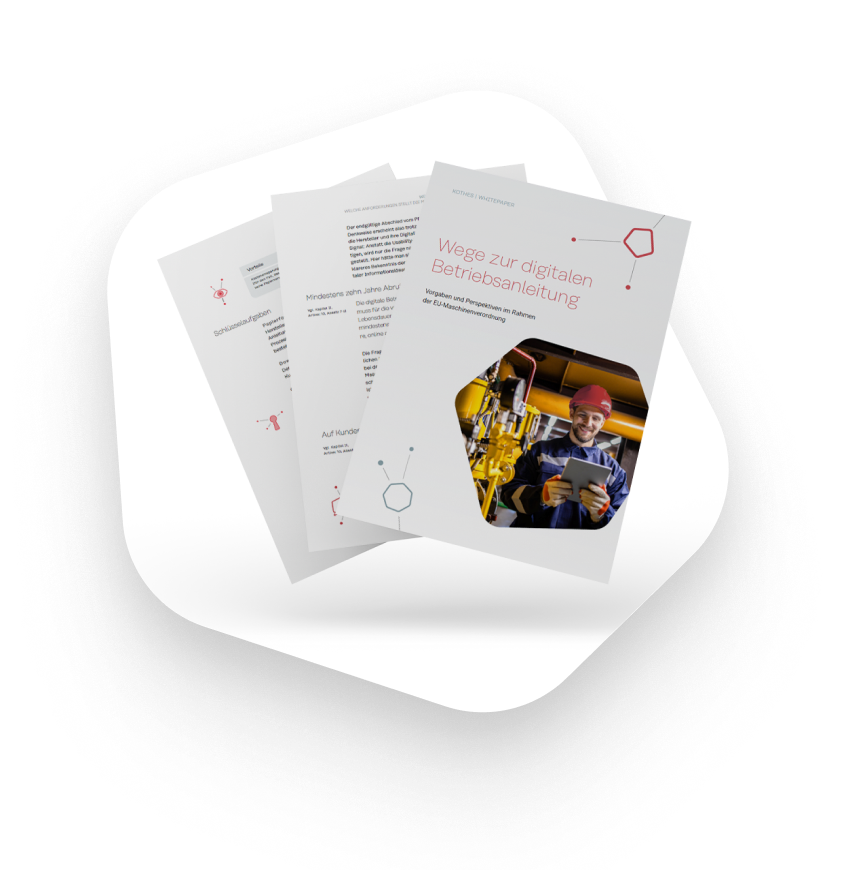
Yes. A PDF is a digital form of technical documentation and can be a useful first step. It can be provided centrally, accessed via a link or QR code and distributed without printing and shipping.
However, the way information is used remains largely document-based. Users open a complete manual and search inside for the relevant section. Especially for extensive documents or specific service queries, this can be time-consuming.
More advanced digital solutions therefore not only make documents available, but deliver precisely the information that matches a product, a task or a usage situation. Content delivery portals, for example, work with modular content and metadata. Users can search for information in a targeted way, filter it and access it on different end devices.
That depends on the product, the target group and the applicable regulations. A general switch to exclusively digital operating manuals is therefore not possible for every product.
The new EU Machinery Regulation explicitly permits the digital provision of operating manuals from the start of its validity on 20 January 2027. Manufacturers must, among other things, clearly indicate how the manual can be accessed. The manual must be capable of being downloaded, stored and printed, and must remain available online for the expected service life of the machine, but at least ten years.
If, at the time of purchase, the buyer requests a printed operating manual, the manufacturer must provide it free of charge within one month. For machines for private end users, the safety information essential for safe commissioning and use must still be supplied in paper form.
You should therefore assess for your products, markets and user groups whether you can completely dispense with the standard paper version. Digital provision via link or QR code is comparatively simple from a technical point of view. However, what is crucial is that access and availability are maintained at all times and that all legal requirements are met.
That depends on the type of problem you want to solve and how your technical documentation is structured today.
Central PDF provision is suitable if you want to make existing documents quickly accessible in digital form and reduce printing, storage and shipping costs. Users reach the appropriate manual directly via a link or QR code. However, searching inside the document remains largely unchanged.
A content delivery portal is useful if users need to find targeted information about a product, a task or a specific situation. To this end, content is structured in modules and enriched with metadata. This is particularly worthwhile when dealing with many products, variants, target groups or languages.
A customised AI solution is an option if users are to ask questions in natural language and receive suitable answers based on approved information. It can also provide rapid access where document collections already exist. For this, the data basis, the quality of the answers and the handling of confidential information must be carefully planned.
Which solution is suitable should therefore not depend solely on the technology. The right approach depends on the specific use case, the needs of the users, the existing content and the economic benefit.
Digitalisation is worthwhile when the current way of handling technical documentation regularly takes a lot of time and generates costs. Typical signs are high printing and shipping costs, time-consuming updates of PDF documents, long search times or frequent service requests because users cannot find the information they need themselves.
Economic benefits can arise in various areas. Instructions provided digitally reduce the costs for printing, storage and shipping. Content delivery portals make it easier to update individual content and guide users more quickly to the right information. As a result, the processing of service cases can be shortened, queries reduced and information made available more quickly for new products, variants or markets.
However, digitalisation is not automatically cost-effective. What matters is whether a specific problem is solved and whether the scale is sufficient in terms of users, products or recurring use cases. For a small, stable documentation stock, central PDF provision may be sufficient. With many products, variants, target groups or frequent changes, a content delivery portal may be worthwhile. Individual AI solutions are particularly interesting when existing information is to be made accessible in new ways or new digital services are to be developed.
Before implementation, the current effort and the expected improvements should therefore be compared. Suitable key indicators are printing and shipping costs, search times, number of service requests, processing times and the frequency of use of the digital offering.
The costs depend very much on how the information is to be made available. A central provision of existing PDF documents is the simplest way to get started. Here, the main effort is for the technical platform, assigning the documents and, if necessary, linking them via QR codes.
With a content delivery portal, licence and operating costs are added. Initial cloud-based systems start at around 800 euros per month. Larger platforms can cost 5,000 to 10,000 euros per month or more, depending on the number of users, amount of data, languages, functions and interfaces.
In addition, effort for the concept, system implementation, integration and content migration must be taken into account. The preparation of existing documents in particular is often underestimated. Depending on the objective, content must be modularised, classified and enriched with metadata. Training and ongoing operations also generate costs.
For individual AI solutions, the costs depend on the use case, the data basis, the required interfaces and the requirements regarding quality, data protection and operation. Therefore, a clearly defined use case should be considered first.
A reliable calculation will only be possible once the objectives, user groups, content and system requirements have been clarified. The cheapest way to get started is not automatically the most economical solution. What matters is which ongoing efforts are reduced and which additional digital services are made possible.
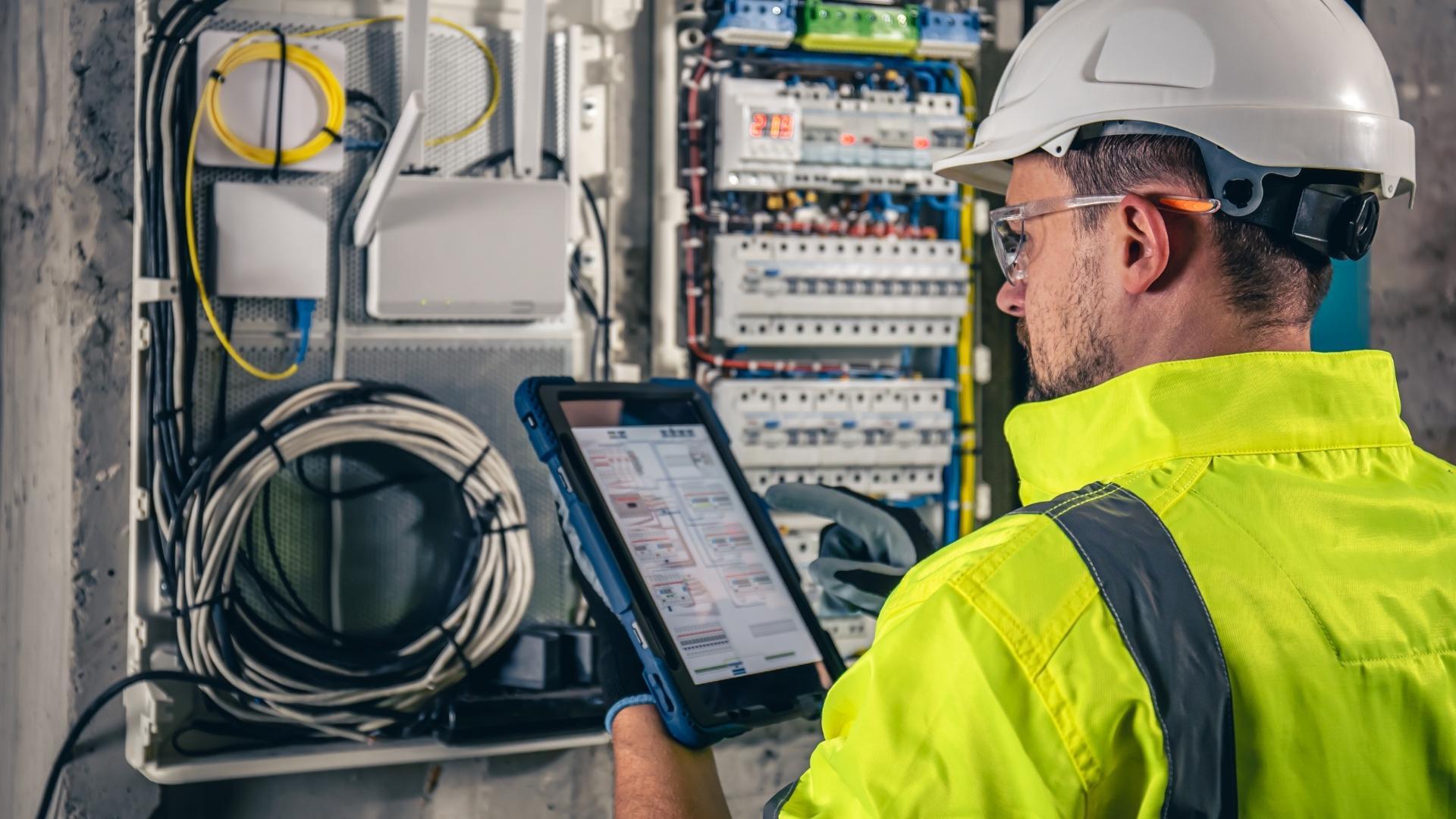
Process optimisation in technical writing starts with the right system landscape. Modular content management systems enable reuse, centralised data storage shortens update times, and automated publication processes reduce manual effort.
Optimising processes in technical writing through digitalisation of documentation ensures teams work more efficiently, deliver content faster and maintain quality standards.
We will get back to you as soon as possible.